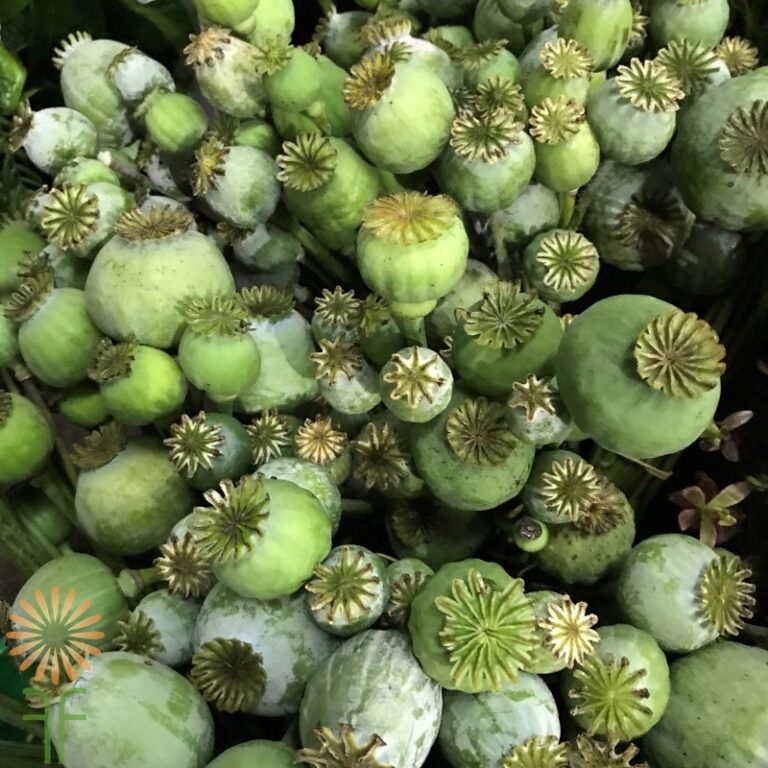
Buy Papaver rhoeas (common poppy, corn poppy, field poppy, or Flanders poppy) is a well-studied annual wildflower in the family Papaveraceae. It is completely distinct from the opium poppy (Papaver somniferum) and contains no significant morphine-type alkaloids. Below is a clear botanical overview.
Taxonomy
- Scientific name: Papaver rhoeas L.
- Family: Papaveraceae (poppy family)
- Common names: Common poppy, corn poppy, field poppy, Flanders poppy, red poppy
- Chromosome number: 2n = 14
It is native to Europe, western Asia, and North Africa and has become naturalized in many temperate regions worldwide, including parts of North America, Australia, and New Zealand.
Morphology
Habit and size
An erect annual herb, usually 20–80 cm tall (occasionally up to 90 cm). The whole plant is covered in stiff, spreading bristle-like hairs.
Stem
Green to reddish, branched, hollow, and densely hairy. The hairs help deter some herbivores and reduce water loss.
Leaves
Alternate, sessile or nearly so, and deeply pinnately lobed (once or twice divided). Lower leaves are larger and more deeply cut; upper leaves are smaller and narrower. Both surfaces are hairy. The leaf margins are irregularly toothed.
Flowers
- Solitary on long peduncles (flower stalks).
- Buds are nodding and enclosed by two hairy sepals that fall off as the flower opens.
- Four large, delicate, overlapping petals, typically bright scarlet-red with a prominent black or dark purple blotch at the base. Petals measure 3–6 cm long and are often crumpled when first opening.
- Numerous stamens with dark anthers surround a central ovary topped by a flat, rayed stigmatic disc (usually 8–12 rays).
- Flowering period in its native range is mainly May–July (later in cooler climates). Buy Papaver rhoeas
Fruit (the seed pod / capsule)
This is the key structure that distinguishes it from the opium poppy:
- Ovoid to oblong-cylindrical capsule, 1–2 cm long.
- Completely smooth (glabrous) — no ribs or warts.
- Capped by a flat stigmatic disc with radiating rays.
- Opens by a ring of small pores just beneath the disc (poricidal dehiscence), allowing the tiny seeds to shake out like a pepper pot when the wind moves the plant.
- Contains several hundred very small, dark brown to black, kidney-shaped seeds.
Latex
Like most poppies, the plant produces a white milky latex when cut. In P. rhoeas this latex is not rich in the alkaloids that make P. somniferum a controlled plant.
Life cycle and reproduction
Buy Papaver rhoeas is a classic arable annual. Seeds germinate mainly in autumn or spring on disturbed, open soil. The plant grows rapidly, flowers, sets seed, and dies within one growing season. A single plant can produce thousands of seeds that remain viable in the soil for many years (a persistent seed bank). This strategy allows it to reappear quickly after soil disturbance such as ploughing or roadworks.
Pollination is primarily by insects (bees, flies, beetles). The flowers offer abundant pollen but little or no nectar.
Habitat and ecology
- Prefers light, well-drained, nutrient-rich soils, especially calcareous or sandy loams.
- Classic plant of arable fields, roadsides, waste ground, and other disturbed sites.
- It is a poor competitor in dense vegetation and declines where herbicides or intensive farming reduce open ground.
- In northern Europe it is strongly associated with traditional cereal fields and has become a cultural symbol (most famously the Flanders poppy of World War I remembrance).
Distinguishing features from Papaver somniferum
| Feature | Buy Papaver rhoeas | Papaver somniferum |
|---|---|---|
| Capsule surface | Smooth | Often ribbed or warty |
| Capsule shape | Narrower, more cylindrical | Broader, more rounded |
| Flower colour | Almost always scarlet with black base | Wide range (white, pink, purple, red) |
| Plant hairiness | Densely bristly | Usually less hairy or glabrous |
| Alkaloid content | Negligible morphine-type alkaloids | High (opium latex) |
| Legal status | Ordinary wildflower | Restricted/controlled in many countries |
Summary of key botanical traits
- Annual, bristly herb of disturbed ground.
- Bright scarlet flowers with four petals and a black basal blotch.
- Smooth, poricidal capsule topped by a rayed stigmatic disc.
- Prolific seed producer with long-lived soil seed bank.
- Ecologically adapted to open, temporary habitats rather than permanent grassland or woodland.
This species is fully legal to grow, study, and photograph in virtually all jurisdictions and is widely used in wildflower seed mixes, educational gardens, and ecological restoration projects. Buy Papaver rhoeas