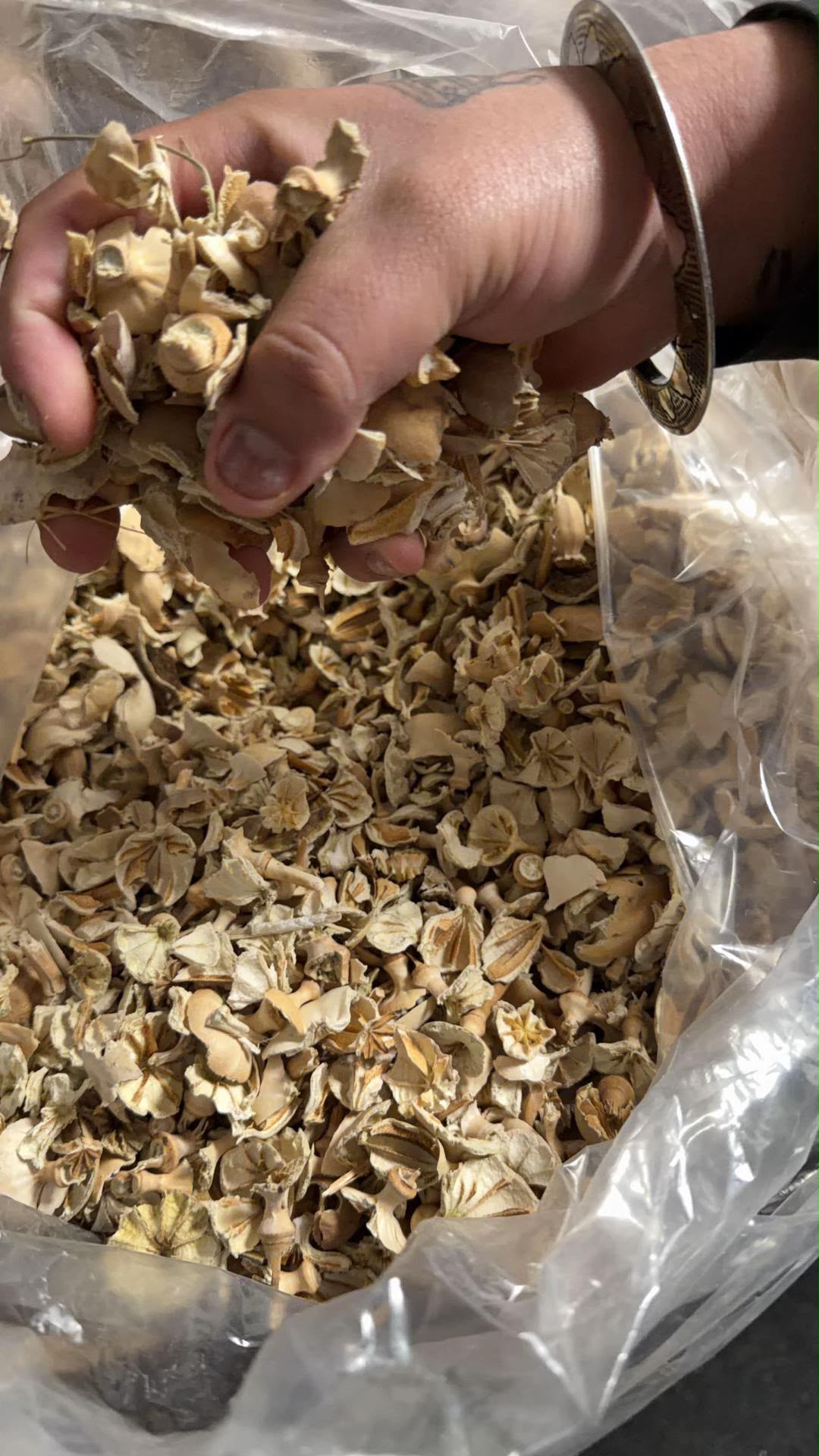
Opium Poppy Capsule: Complete Educational Botanical and Legal Overview
The opium poppy capsule is the mature fruit of the plant Papaver somniferum. This structure has been the subject of botanical study, historical documentation, and strict legal control for centuries. This article provides a factual, educational examination of the opium poppy capsule for readers interested in plant science, ethnobotany, and regulatory history. It contains no instructions, techniques, or practical guidance related to cultivation for alkaloid production or any form of extraction.
What Is an Opium Poppy Capsule?
In botanical terms, the opium poppy capsule is a dry, dehiscent fruit known as a poricidal capsule. After the flower of Papaver somniferum sheds its petals, the ovary develops into this rounded or egg-shaped structure. When mature and dry, the capsule opens through a series of small pores located just beneath a flat, rayed stigmatic disc at the top. These pores allow the numerous tiny seeds inside to be released by wind or physical movement of the plant.
The capsule is the defining reproductive organ of the species. It is distinct from the capsules of related poppies such as the common field poppy (Papaver rhoeas), which is smaller, smoother, and lacks the same chemical profile that has placed Papaver somniferum under international control.
Botanical Morphology of the Opium Poppy Capsule
The opium poppy capsule typically measures 1.5 to 5 centimeters in length and diameter, depending on variety and growing conditions. Immature capsules are green and fleshy. As they mature they turn pale green, then brown, and become hard and dry.
Key external features include:
- A rounded to oblong body that may show shallow longitudinal ribs in some cultivars.
- A prominent flat disc at the apex formed by the fused stigmas. This disc usually has 8–12 radiating rays.
- A short stalk (pedicel) that holds the capsule upright on the plant.
Internally the capsule is divided into several chambers (locules) separated by thin walls. Each chamber contains hundreds of small, kidney-shaped seeds. A single capsule can hold 1,000 to several thousand seeds. The seeds themselves are the only part of the plant routinely used in food and are sold commercially after processing that reduces residual alkaloid content to levels considered safe for consumption under food regulations.
The plant that produces the capsule is an annual herb that can reach 30–150 cm in height. It has lobed, glaucous (bluish-green) leaves and large, showy flowers with four petals ranging in color from white and pink to deep purple or red. Once the petals drop, the ovary rapidly enlarges into the capsule.
Development from Flower to Mature Capsule
The life cycle of the opium poppy follows a typical annual pattern. Seeds germinate in spring or autumn depending on climate. The plant grows vegetatively, then produces flowers. After pollination (primarily by insects), petal abscission occurs within a few days. The ovary immediately begins to swell. Over the following weeks the capsule enlarges, the seeds develop inside, and the outer wall hardens. When fully ripe the capsule dries and the pores open, completing the reproductive cycle.
This sequence is of interest to botanists studying fruit development, seed dispersal strategies, and the evolution of poricidal dehiscence within the Papaveraceae family. The same basic capsule structure appears in many other poppy species, but chemical composition and legal status differ dramatically.
Historical Context of the Opium Poppy Capsule
Papaver somniferum has been cultivated for thousands of years. Archaeological and textual evidence from the Mediterranean, Near East, and later Asia documents the plant’s dual role as a source of edible seeds and as the origin of a latex that was collected from the unripe capsule. That latex, historically known as opium, entered traditional medical systems and later became the foundation of modern opioid pharmaceuticals such as morphine and codeine.
Because of the potent effects of the alkaloids present in the latex, the plant and its capsule have been subject to progressive regulation. International treaties, beginning with early 20th-century agreements and continuing through the Single Convention on Narcotic Drugs (1961) and subsequent protocols, place Papaver somniferum under strict control. National laws in virtually every country implement these treaties by prohibiting unauthorized cultivation and possession of the plant material intended for alkaloid production.
The historical importance of the opium poppy capsule therefore lies in two parallel tracks: its contribution to medicine and its role in the development of controlled-substance frameworks that aim to prevent non-medical use and associated public-health harms.
Legal Status of the Opium Poppy Capsule
In most jurisdictions the opium poppy capsule is treated as controlled plant material when it is associated with the production of opium or related alkaloids.
- In the United States the Controlled Substances Act and Drug Enforcement Administration regulations classify the opium poppy and its capsules as Schedule II controlled substances when cultivated or possessed for alkaloid content. Culinary seeds that have been processed are generally exempt.
- Similar restrictions exist across the European Union, the United Kingdom, Canada, Australia, and most other countries. Penalties for unauthorized cultivation or possession can include significant fines and imprisonment.
- Even ornamental cultivation of Papaver somniferum varieties is restricted or prohibited in many places if authorities determine the intent is related to alkaloid production.
Laws can vary by state, province, or municipality and are subject to change. Anyone with a legitimate research, educational, or ornamental interest must verify current local regulations before any activity involving the plant. Possession of dried capsules purchased as “decorative” items has, in some cases, led to legal scrutiny when alkaloid content is detected.
Search engines and online platforms often limit or demote content that appears to facilitate illegal activity involving controlled plants. Educational pages that stay strictly within botanical description, history, and legal summary are more likely to remain accessible.
Distinguishing the Opium Poppy Capsule from Other Poppies
Not every poppy capsule is an opium poppy capsule. The common field poppy (Papaver rhoeas), Oriental poppy (Papaver orientale), and Iceland poppy (Papaver nudicaule) produce capsules that share the same basic poricidal structure but differ in size, surface texture, chemical composition, and legal status.
| Feature | Opium Poppy Capsule (P. somniferum) | Field Poppy Capsule (P. rhoeas) |
|---|---|---|
| Typical size | Larger (1.5–5 cm) | Smaller (1–2 cm) |
| Surface | Often ribbed or slightly textured | Smooth |
| Alkaloid profile | High morphine-type alkaloids possible | Negligible |
| Legal status | Strictly regulated | Ordinary wildflower |
| Common flower colors | White, pink, purple, red | Almost always scarlet with black base |
Accurate identification is essential for both botanical study and legal compliance. Misidentification has occasionally led individuals into regulatory difficulties.
Seeds Versus the Capsule
The only widely legal commercial product derived from Papaver somniferum is the seed. Food-grade poppy seeds are cleaned and processed so that residual alkaloid levels fall well below regulatory thresholds. They appear in baked goods, spice blends, and oil production across many cuisines. The capsule itself is not a food ingredient and is not sold through legitimate culinary channels.
This distinction is important for educational clarity: discussion of the seeds as a food product does not extend to the capsule as a source of controlled substances.
Educational Value and Responsible Information
Studying the opium poppy capsule offers legitimate insights into:
- Fruit morphology and seed-dispersal mechanisms in the Papaveraceae
- The historical intersection of botany, medicine, and law
- The evolution of international drug-control regimes
- The difference between ornamental, culinary, and controlled uses of related plants
Responsible educational content prioritizes accuracy, context, and clear boundaries. It does not provide operational details that could be misused. Readers seeking deeper botanical knowledge are encouraged to consult peer-reviewed journals, university floras, and official government agricultural or controlled-substance resources.
Frequently Asked Questions
Is every round poppy seed head an opium poppy capsule?
No. Many ornamental and wild poppies produce similar-looking capsules. Only Papaver somniferum is the opium poppy.
Why is the capsule regulated if the seeds are sold as food?
Regulation focuses on the potential for alkaloid production from the plant and its unripe or dried capsules, not on processed culinary seeds.
Can the plant be grown legally for flowers or seeds?
In some jurisdictions limited ornamental or seed-production cultivation is permitted under license or specific exemptions. In others it is prohibited. Always check current local law.
What is the main botanical difference from the Flanders (field) poppy?
The field-poppy capsule is smaller, smoother, and chemically distinct; the plant is also more densely bristly and almost always has scarlet petals with a black basal blotch.
Conclusion
The opium poppy capsule is a botanically distinctive fruit that has shaped both scientific understanding of the poppy family and the modern framework of international narcotic control. Its structure, development, and historical role reward careful study. At the same time, its association with controlled alkaloids requires that any discussion remain strictly educational and compliant with law.
This article has described the capsule’s morphology, life cycle, historical significance, and legal status without providing any methods related to cultivation for alkaloid purposes or extraction. Readers are strongly advised to consult official sources for the regulations that apply in their own location. Accurate botanical knowledge and respect for the law are the foundation of responsible education on this topic.